An INNVESTIO perspective on a shift reshaping short-run food-label printing The economics of label...
The Place of Culture Books in Print
By Dimitris Spyropoulos, Commercial Director, INNVESTIO Group
Culture books hold a distinct place in the print industry. Unlike mass-market publishing, they speak to specific readerships — regional communities, educational institutions, cultural organisations and independent publishers. Their value isn't measured in print runs alone, but in the contribution they make to knowledge, education and the preservation of cultural heritage.
That creates a real production challenge. Many cultural titles need shorter runs, selective reprints, updated editions, controlled stock and reduced financial risk. Traditional high-volume production models tend to generate surplus inventory, tied-up capital and logistical complexity — and publishers increasingly want to print the quantity they need, at the moment they need it.
The reality of production
The publishing market is shifting. Demand is harder to forecast, readers expect broader title availability, and publishers want to keep niche titles accessible without holding large stock. Production flexibility is becoming as important as production capacity.
The question is no longer "how many books can I print?" It's "how do I keep a title available while keeping risk and stock under control?"
The role of digital production
Digital printing has created real opportunities here. Short runs become economical. Reprints can be scheduled quickly, without waiting for large-volume production cycles. That keeps cultural works available for longer while reducing the operational risk tied to unsold stock.
The Xeikon perspective
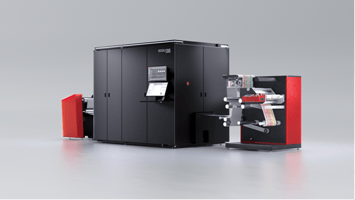
Technologies such as Xeikon's Sirius platform (SX30000/SX20000) offer an alternative production model for book and publishing environments — where flexibility, versioning, reprints and stock management matter as much as raw volume. Rather than optimising for volume alone, publishers can balance availability, cost control, inventory management and production agility. That balance is especially valuable for cultural titles, where demand stays real over the years but is spread across small, unpredictable quantities.
Who helps publishers choose the right route
Choosing the right production model isn't only a technology decision. It depends on the number of titles, demand variability, stock strategy and each publisher's own goals. Here, a production partner becomes as important as the press itself.
Conclusion
The future of cultural publishing isn't only about printing more books. It's about keeping valuable content economically and sustainably accessible to readers. Flexible digital production gives publishers one more real tool to reach that goal.
Technology alone isn't the answer. The answer is choosing the production model that best supports the long-term accessibility of cultural knowledge.
INNVESTIO is an Industrial Architect — helping publishers and converters choose, implement and support the production route that fits their own applications and business goals, across print technologies, finishing, workflow and materials.