Λύσεις Αγαύης και Matcha στη Σύγχρονη Σύνθεση Τροφίμων Η βιομηχανία τροφίμων αλλάζει. Οι...
An INNVESTIO perspective on a shift reshaping short-run food-label printing
The economics of label printing are changing, and a small Swedish family business shows clearly where things are heading.
FG Larsson, founded in 1911 and now run by its fourth generation from Örebro with a team of four, built its business on proximity, speed and flexibility for local food and drink customers. As orders grew smaller, more varied and more urgent, the company kept having to subcontract part of its food-label work, which cost it the very speed and control its customers valued.
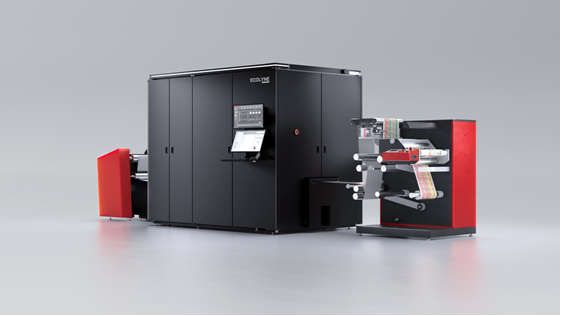
In early 2026 it brought that production back in-house with a Xeikon Ecolyne press. What matters for the wider market is how it did so. Instead of a large upfront machine purchase, FG Larsson took the press on a subscription that bundles the press, service, maintenance and consumables into a predictable monthly cost. For a four-person business, that removed the single biggest barrier to going digital: the capital outlay that is hard to justify without guaranteed volumes in a fast-moving market.
Two things stand out for anyone weighing a similar move. The first is technology fit. The company deliberately chose food-safe toner over its previous inkjet route, citing simpler maintenance, more predictable quality and waste that carries no hazardous materials. As owner Magnus Lamke put it, "The toner is far easier." The second is commercial control. Knowing the cost per label and the monthly outlay in advance turned a risky investment into a plannable one.
The payoff was not only operational. Bringing food labels in-house opened new business: short-run work for small local food producers, and niche jobs such as private-label winery labels that larger converters often decline because the volumes are too small. A production decision became a growth strategy.
Why this matters, from where we sit. This is the kind of decision INNVESTIO exists to de-risk. The real question is rarely which machine to buy. It is how a given set of volumes, applications, compliance requirements such as food-contact and PPWR, and financing options fit together into a production route that actually works. Food-safe digital toner and flexible financing now let small and mid-sized converters take on work that used to be uneconomic, provided the route is planned properly from the start.
As an Industrial Architect across printing, packaging, finishing, materials and compliance, that is the conversation we have with converters and brand owners across Benelux, Türkiye and SE Europe. We do not sell a box. We help match capability to opportunity.
Considering in-house or short-run digital label production? Talk to us early, before the specification locks.